
French Macarons have always held a special place in my heart, a symbol of delicate beauty and exquisite flavor that seemed almost magical. For years, I admired them from afar, convinced they were the exclusive domain of professional patissiers. My own journey into mastering these elusive cookies began with a mixture of awe and determination after a particularly inspiring trip to Paris. I remember my first few attempts; they were… humbling, to say the least! Flat, cracked, hollow – you name it, I probably made it. But I was hooked on the challenge.
Through countless batches, meticulous note-taking, and a healthy dose of stubbornness, I slowly began to unlock their secrets. There’s a unique satisfaction that comes from piping those perfect little circles and watching them develop their signature “feet” in the oven. It’s a delicate dance of precision and patience, but the reward of a perfectly crisp shell giving way to a chewy, flavorful interior is absolutely worth every moment. Today, I’m thrilled to share the culmination of my macaron adventures with you, so you can experience that same joy and pride in creating these stunning treats right in your own kitchen.
Why You’ll Love These French Macarons
There’s something truly special about biting into a homemade French macaron, and I know you’re going to fall in love with making them just like I did. They offer an unparalleled delicate texture, a beautiful appearance that brightens any table, and the endless possibilities for customizable flavors. The entire baking experience, from carefully folding the meringue to watching those perfect “feet” rise in the oven, is incredibly rewarding. Each batch feels like a small victory, culminating in a dessert that tastes as good as it looks.
The Allure of Homemade French Macarons
Making French macarons at home allows you to control every ingredient, ensuring peak freshness and the purest flavors. Forget the sometimes-stale or overly sweet store-bought versions; your homemade macarons will boast a superior taste and an exquisitely tender chew. The satisfaction of crafting these beautiful treats from scratch is immeasurable, and your friends and family will undoubtedly be impressed!
Essential Equipment for Perfect French Macarons
Achieving those picture-perfect French macarons really comes down to having the right tools. While you might already have some of these in your kitchen, a few specialized pieces can make all the difference in ensuring consistency and success. These aren’t just fancy gadgets; they play a crucial role in achieving the delicate balance and precise textures that define a great macaron.
Tools for Crafting Exquisite French Macarons
- Kitchen Scale: Essential for precise ingredient measurements, which is critical for macaron success.
- Stand Mixer: Necessary for whipping egg whites to stiff, glossy peaks.
- Piping Bag with Round Tip (Ateco 804 or similar): For consistent, evenly sized macaron shells.
- Silicone Baking Mats (e.g., Silpat) or Parchment Paper: Prevents sticking and promotes even baking.
- Baking Sheets: Sturdy, flat sheets are crucial for even heat distribution.
Ingredients for French Macarons
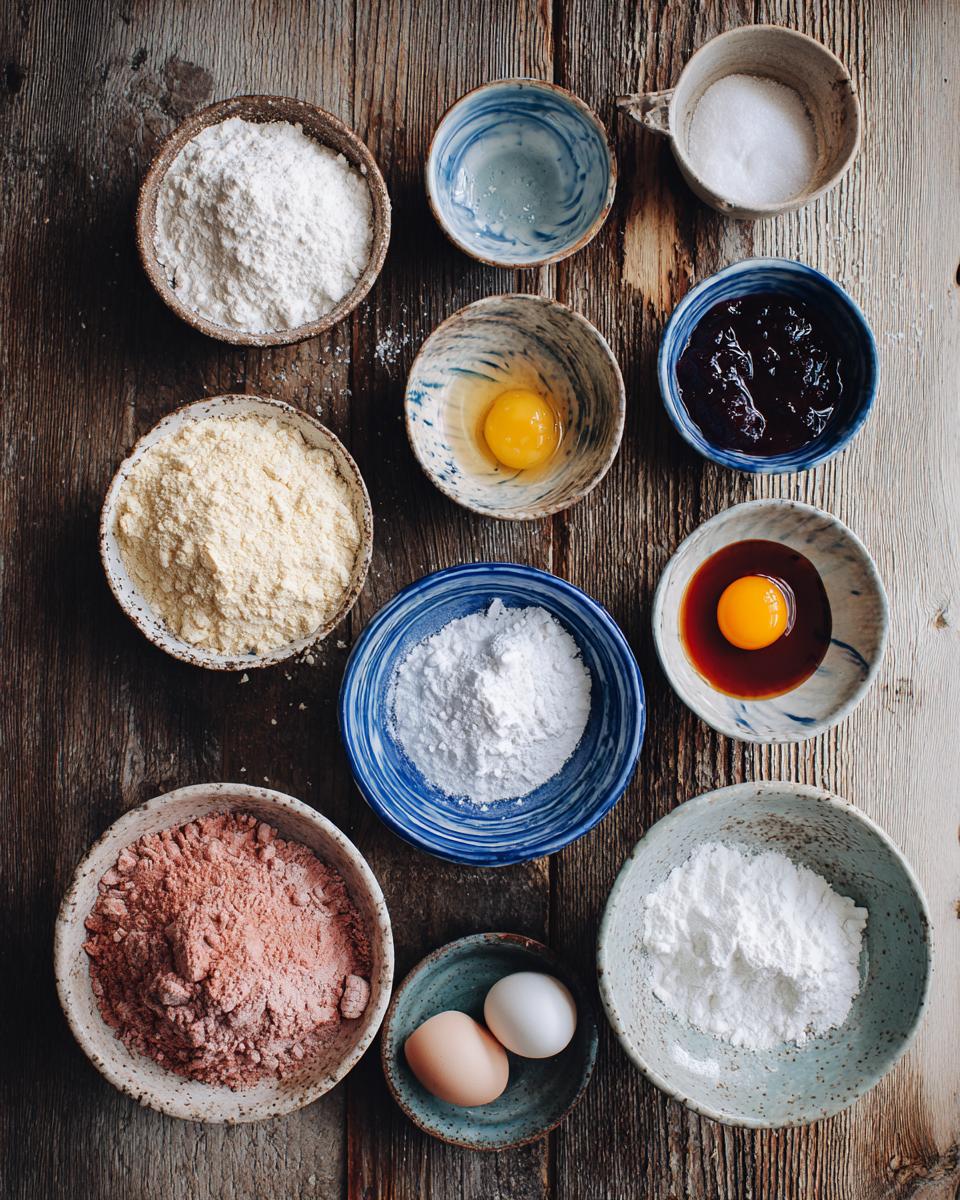
The secret to incredible French macarons lies not just in the technique, but also in the quality and preparation of your ingredients. There aren’t many, which means each one plays a starring role! For the best results, always measure your ingredients by weight using a kitchen scale – this is non-negotiable for macaron success. Precision is truly your best friend here, as even a slight variation can throw off the delicate balance needed for those perfect shells.
I’ve learned through trial and error that starting with the right foundations makes all the difference. Don’t be tempted to swap out ingredients or eyeball measurements; stick to the script, and these simple components will transform into something truly magical. Let’s gather what we need!
Preparing Your Ingredients for French Macarons
- 100g almond flour: Make sure it’s superfine and blanched. I like to pulse it briefly in a food processor with the powdered sugar, then sift it several times to eliminate any lumps or larger almond pieces.
- 100g powdered sugar: Also known as confectioners’ sugar. This gets sifted with the almond flour for a smooth shell.
- 75g granulated sugar: This is for our meringue. Don’t use superfine sugar; regular granulated works perfectly.
- 2 large egg whites: Crucially, these need to be aged at room temperature for at least 24 hours (or even up to 3 days!). This process dehydrates them slightly, leading to a more stable meringue.
- 1/4 tsp cream of tartar: A little boost for meringue stability, helping those egg whites whip up beautifully.
- Gel or powder food coloring: For beautiful, vibrant hues! Liquid food coloring can add too much moisture, so stick to gel or powder.
How to Make French Macarons: Step-by-Step Guide
Now for the fun part: bringing all those carefully prepared ingredients together to create your beautiful French macarons! Follow these steps closely, paying attention to the details, and you’ll be well on your way to macaron success. Precision and a gentle touch are key, especially during the mixing and piping stages. Don’t rush; enjoy the process!
- Prepare Dry Ingredients: In a medium bowl, sift your almond flour and powdered sugar together. I always sift at least twice, and sometimes even three times, to ensure there are absolutely no lumps. This is crucial for smooth macaron shells. Set aside.
- Whip Egg Whites: In the bowl of your stand mixer, begin whipping your aged egg whites on medium speed until they become foamy. Add the cream of tartar at this stage.
- Create Meringue: Gradually increase the speed to high and slowly add the granulated sugar, one tablespoon at a time. Continue whipping until you achieve stiff, glossy peaks. When you lift the whisk, the meringue should hold its shape firmly and shine. This can take anywhere from 5-10 minutes. If you’re adding food coloring, do it now, mixing until fully incorporated.
- Perform the Macaronage: This is where the magic happens! Add about one-third of the sifted dry ingredients to your meringue. Gently fold them in using a rubber spatula, employing a technique where you scrape down the side of the bowl and then across the middle, lifting the mixture. Repeat with the remaining dry ingredients in two more additions.
- Pipe Macarons: Transfer your macaron batter to a piping bag fitted with a round tip. Hold the bag vertically and pipe 1.5-inch rounds onto your parchment-lined or silicone mat-lined baking sheets. Leave about an inch between each macaron.
- Tap and Rest: Once piped, firmly tap the baking sheets on your counter 2-3 times. This helps release any trapped air bubbles, preventing hollow shells. Let the piped macarons rest at room temperature for 30-60 minutes, or until a “skin” forms on top and they are no longer sticky to the the touch.
- Bake: Preheat your oven to 300°F (150°C). Bake one tray at a time for 12-15 minutes.
- Cool Completely: Remove from the oven and let them cool completely on the baking sheet before attempting to remove them.
- Fill and Mature: Once cool, pair up same-sized shells. Fill with your desired filling and sandwich them together. Store in an airtight container in the refrigerator for at least 24 hours to allow them to “mature” – this is when their flavor and texture truly shine!
Mastering the Macaronage for French Macarons
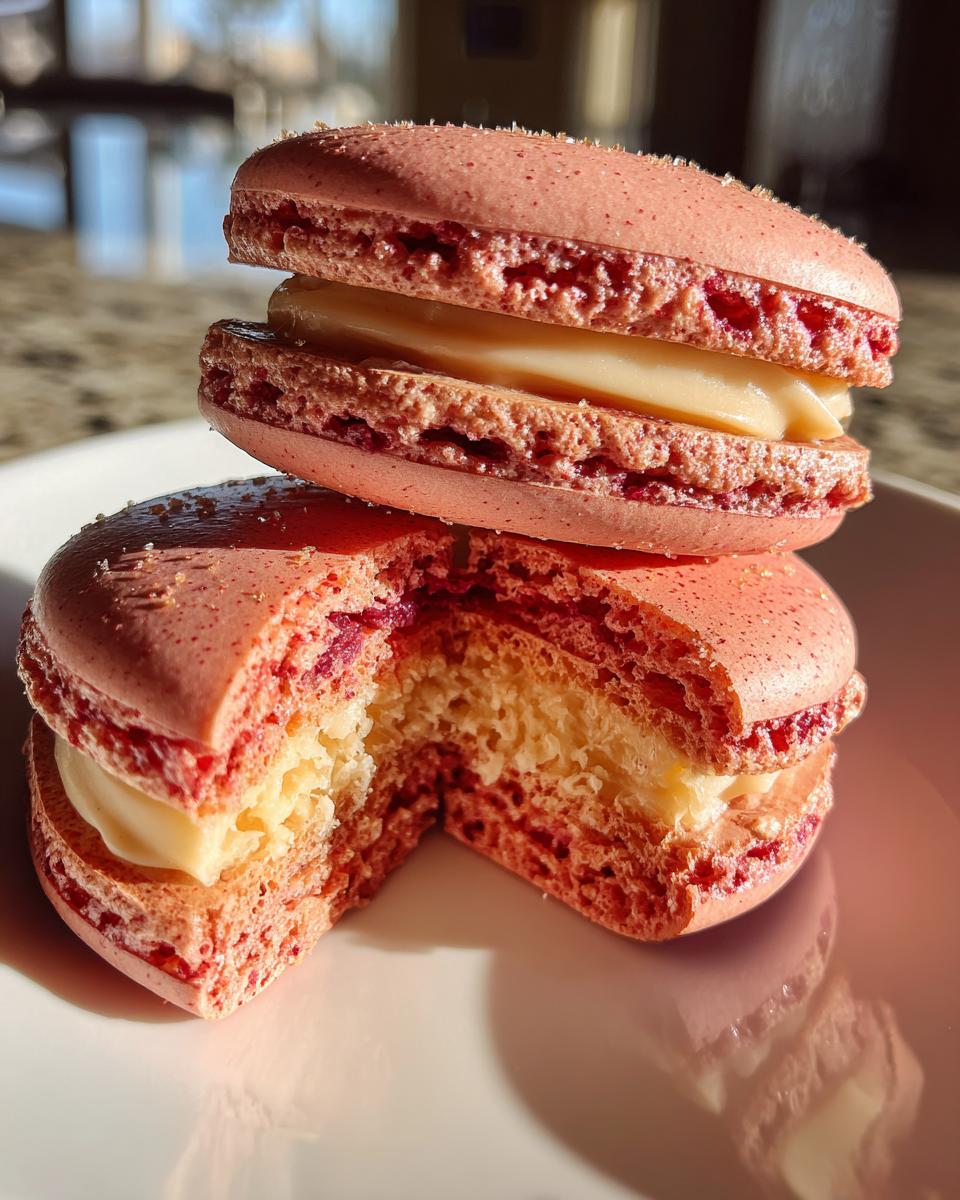
The macaronage is arguably the most critical step in making French macarons, and it’s all about achieving that perfect “lava-like” consistency. Once your stiff meringue is ready, you’ll gently fold in your sifted almond flour and powdered sugar. You’re aiming for a batter that flows slowly and continuously off your spatula, forming a ribbon that eventually reincorporates into the main mixture within about 10-20 seconds. It should be thick enough to hold its piped shape but fluid enough to settle slightly, creating smooth tops. Undermixing will give you lumpy, cracked shells, while overmixing leads to runny batter and flat macarons without feet. Practice makes perfect here!
Baking and Cooling Your French Macarons
When it’s time to bake your French macarons, preheat your oven to a precise 300°F (150°C). Place one baking sheet in the center of the oven and bake for 12-15 minutes. Around the 6-7 minute mark, I like to quickly rotate the tray 180 degrees to ensure even baking. You’ll know they’re done when they’ve developed their characteristic “feet” at the bottom and the shells are firm and don’t jiggle when gently touched. Once baked, it’s absolutely vital to let the macarons cool completely on the baking sheet. Trying to remove them too soon will result in broken shells and a sticky mess, as they need time to fully set and release from the mat.
Tips for Flawless French Macarons
Making French macarons can feel like a delicate art, but with a few expert tips, you can avoid common pitfalls and achieve consistently beautiful results. Remember, precision in measuring and patience in execution are your strongest allies. Always use a kitchen scale for ingredients, as volumetric measurements can vary too much. Don’t rush the aging of egg whites; it truly makes a difference in meringue stability. Also, trust your gut during the macaronage – it’s better to slightly undermix than overmix. A slightly thicker batter is easier to salvage than a runny one!
Troubleshooting Common French Macarons Issues
- Flat Macarons: Likely overmixed batter. Fold less next time, aiming for that “lava” consistency.
- Lopsided Feet: Uneven oven temperature or uneven tapping. Rotate your trays and tap firmly.
- Sticky Shells: Undercooked or not rested long enough. Increase bake time slightly, or allow more resting time before baking.
- Hollow Shells: Can be from over-whipping egg whites or insufficient tapping to release air bubbles.
Filling and Assembling Your French Macarons
Once your beautiful French macarons shells are completely cool, the real fun of customizing begins: choosing and adding your filling! This is where you can really let your creativity shine and tailor your macarons to any taste preference or occasion. I always recommend pairing up shells of similar size for a neat, uniform look. Then, simply pipe your chosen filling onto the flat side of one shell and gently press another shell on top, twisting ever so slightly to distribute the filling evenly. Don’t be shy with the filling; a generous amount makes for a truly satisfying bite!
Creative Filling Ideas for French Macarons
The possibilities for filling your French macarons are endless! My go-to favorites include a rich chocolate ganache, a vibrant raspberry jam for a fruity burst, or a classic, silky vanilla buttercream. Don’t hesitate to experiment with different flavors like lemon curd, pistachio cream, or even a salted caramel. The filling not only adds flavor but also contributes to the macaron’s delightful chewy texture as it matures.
Storing and Enjoying Your French Macarons
Once filled, your French macarons actually get better with a little time! They need to “mature” in the refrigerator for at least 24 hours. This allows the filling’s moisture to soften the shell slightly, creating that perfect chewy interior. Store them in an airtight container in the fridge for up to 5-7 days. For the best taste and texture, take them out about 15-20 minutes before serving to let them come to a more enjoyable room temperature.
French Macarons: Frequently Asked Questions
I get a lot of questions about making French macarons, and I’m always happy to share what I’ve learned! It’s a delicate process, so it’s natural to have a few queries along the way. Here are some of the most common questions I hear about achieving perfect French macarons, along with my best advice to help you on your baking journey.
Why are my French Macarons hollow?
Hollow French macarons are a common frustration! This usually happens from over-whipping your egg whites, which incorporates too much air, or insufficient tapping of your trays after piping, leaving air bubbles trapped inside.
Can I make French Macarons without aging egg whites?
While you technically can, I strongly recommend aging your egg whites for French macarons. It dehydrates them slightly, leading to a much more stable meringue and more consistent, successful shells. Fresh egg whites are less predictable.
How do I know when my French Macarons are fully baked?
You’ll know your French macarons are fully baked when they’ve developed distinct “feet” and the shells are firm on top. Gently try to wiggle one; if it doesn’t budge from its foot, it’s ready! If it’s still wobbly, give it another minute or two.
Estimated Nutritional Information for French Macarons
For those mindful of their intake, here’s an estimated nutritional breakdown for one French macaron (approximately 15g). Please remember these values are estimates and can vary based on the exact ingredients you use, the brand of almond flour, and especially the type and amount of filling. They provide a general idea to help you plan your delicious indulgence!
Share Your French Macarons Success
I absolutely love hearing from you! If you’ve tried this French macarons recipe, please share your experience in the comments below. Did you try a unique filling? What colors did you choose? Your tips and photos inspire me and other bakers in our community. Don’t forget to rate the recipe too – it helps others discover the joy of making their own beautiful macarons!
Print
French Macarons Recipe
- Total Time: 1 hour 45 minutes
- Yield: 20-25 macarons 1x
- Diet: Vegetarian
Description
French macarons are delicate, meringue-based sandwich cookies with a crisp shell and soft, chewy interior, typically filled with ganache, buttercream, or jam. They are known for their vibrant colors and exquisite flavors.
Ingredients
- 100g almond flour
- 100g powdered sugar
- 75g granulated sugar
- 2 egg whites (aged at room temperature for 24 hours)
- 1/4 tsp cream of tartar
- Food coloring (gel or powder)
- For the filling (e.g., chocolate ganache, raspberry jam, vanilla buttercream)
Instructions
- Sift almond flour and powdered sugar together. Repeat sifting twice to ensure no lumps.
- Whip egg whites on medium speed until foamy. Add cream of tartar and continue whipping.
- Gradually add granulated sugar while whipping on high speed until stiff, glossy peaks form. Add food coloring.
- Gently fold in the sifted almond flour and powdered sugar mixture into the meringue in three additions, until a ‘lava-like’ consistency (macaronage) is achieved.
- Transfer the batter to a piping bag fitted with a round tip.
- Pipe 1.5-inch rounds onto parchment-lined baking sheets.
- Tap the baking sheets firmly on the counter several times to release air bubbles.
- Let the macarons rest at room temperature for 30-60 minutes, or until a skin forms and they are no longer sticky to the touch.
- Preheat oven to 300°F (150°C).
- Bake for 12-15 minutes, rotating the tray halfway through, until shells have ‘feet’ and are firm.
- Let cool completely on the baking sheet before filling.
- Fill with your desired filling and sandwich two shells together.
- Store in an airtight container in the refrigerator for at least 24 hours before serving for optimal flavor and texture.
Notes
- Aging egg whites helps achieve a more stable meringue.
- Do not overmix the batter during macaronage, as this can result in flat macarons.
- Tap the baking sheet well to prevent hollow shells.
- Resting time is crucial for developing the ‘feet’.
- Bake one tray at a time for even cooking.
- Macarons taste best after maturing in the refrigerator for a day.
- Prep Time: 45 minutes
- Cook Time: 15 minutes
- Category: Dessert
- Method: Baking
- Cuisine: French
Nutrition
- Serving Size: 1 macaron (approx. 15g)
- Calories: 70
- Sugar: 8g
- Sodium: 5mg
- Fat: 3g
- Saturated Fat: 0.5g
- Unsaturated Fat: 2.5g
- Trans Fat: 0g
- Carbohydrates: 9g
- Fiber: 1g
- Protein: 2g
- Cholesterol: 0mg