
Sheet Pan Bibimbap has become a weeknight lifesaver in my kitchen, transforming what used to be a multi-pot affair into a streamlined, delicious experience. I first fell in love with traditional bibimbap years ago, but the thought of juggling individual vegetable preparations often kept me from making it at home. That all changed when I discovered the magic of the sheet pan method.
As a home cook passionate about making international cuisine accessible and enjoyable for everyone, I’m always looking for ways to simplify complex dishes without sacrificing flavor. This Sheet Pan Bibimbap delivers on all fronts: it’s incredibly convenient, packed with vibrant tastes, and cleans up in a flash. It’s truly a testament to how a little ingenuity can turn a beloved classic into an effortless family favorite.
Why You’ll Love This Sheet Pan Bibimbap
Making Sheet Pan Bibimbap isn’t just about getting dinner on the table; it’s about enjoying the process and the delicious outcome without the usual fuss. You’ll adore this recipe because:
- It’s incredibly convenient, perfect for busy weeknights.
- The flavors are bright, savory, and utterly satisfying.
- It’s packed with healthy vegetables and lean protein.
- Easily customizable to fit your family’s preferences.
- Cleanup is a breeze with just one sheet pan!
The Ultimate Sheet Pan Bibimbap Experience
The unique appeal of using a sheet pan for bibimbap lies in its simplicity. Everything cooks together, infusing flavors and ensuring consistent results every time. You get that beloved Korean taste with minimal effort, making for a truly stress-free and delicious meal.
Essential Ingredients for Sheet Pan Bibimbap
Creating a delicious Sheet Pan Bibimbap starts with fresh, quality ingredients. I’ll walk you through exactly what you’ll need, including the precise measurements and any special preparations. This list covers everything from your protein to the essential sauce components, ensuring you have all your bases covered for a flavorful and authentic-tasting meal with minimal fuss.
- 1 pound ground beef or ground turkey
- 1 tablespoon sesame oil (for meat marinade)
- 1 tablespoon soy sauce (for meat marinade)
- 1 teaspoon minced garlic (for meat marinade)
- 1/2 teaspoon grated fresh ginger (for meat marinade)
- 1/4 teaspoon black pepper (for meat marinade)
- 1 cup sliced carrots (about 2 medium carrots)
- 1 cup sliced zucchini (about 1 medium zucchini)
- 1 cup sliced bell peppers (any color)
- 1 cup sliced mushrooms
- 1/2 cup chopped onion
- 1 tablespoon olive oil (for vegetables)
- Cooked rice, for serving
- Optional toppings: fried eggs, kimchi, sesame seeds, chopped green onions
Sheet Pan Bibimbap Vegetable Selection
For your Sheet Pan Bibimbap, choosing fresh, vibrant vegetables is key. I like to use a colorful medley, making sure to cut them uniformly for even cooking. You’ll need 1 cup sliced carrots, 1 cup sliced zucchini, 1 cup sliced bell peppers (your favorite color!), 1 cup sliced mushrooms, and 1/2 cup chopped onion. Don’t be afraid to add other quick-cooking veggies like broccoli florets or snap peas if you have them on hand!
Crafting the Gochujang Sauce for Sheet Pan Bibimbap
The gochujang sauce is the heart and soul of your Sheet Pan Bibimbap, bringing that signature sweet, savory, and spicy kick. To make it, you’ll whisk together 2 tablespoons gochujang, 1 tablespoon sesame oil, 1 tablespoon soy sauce, 1 tablespoon rice vinegar, 1 teaspoon sugar, 1 teaspoon minced garlic, and 1 teaspoon toasted sesame seeds. This balance creates a wonderfully complex flavor that ties the whole dish together.
How to Make Sheet Pan Bibimbap
Making Sheet Pan Bibimbap is surprisingly simple, and I’m going to guide you through each step to ensure your dinner comes out perfectly. We’ll start with prepping your ingredients, move on to baking everything to tender-crisp perfection, and finally, bring it all together with that glorious gochujang sauce. Follow these instructions closely, and you’ll have a fantastic meal on your table in no time.
Preparing Your Sheet Pan Bibimbap Ingredients
First things first, preheat your oven to 400°F (200°C) and line a large sheet pan with parchment paper. This makes cleanup a breeze! Next, in a medium bowl, combine your 1 pound ground beef or ground turkey with 1 tablespoon sesame oil, 1 tablespoon soy sauce, 1 teaspoon minced garlic, grated fresh ginger, and black pepper. Mix it all thoroughly with your hands to ensure the meat is well-seasoned. In a separate large bowl, toss your sliced carrots, zucchini, bell peppers, mushrooms, and onion with 1 tablespoon of olive oil until they’re lightly coated.
Baking Your Sheet Pan Bibimbap
Now, carefully spread the seasoned vegetables onto one half of your prepared sheet pan in an even layer. On the other half, crumble the seasoned ground beef or turkey. Try to keep the meat in a single layer as well for even cooking. Pop the sheet pan into your preheated oven and bake for 15-20 minutes. Halfway through, around the 8-10 minute mark, give the ground beef a good stir to break it up and ensure it cooks through evenly. The goal is tender-crisp vegetables and fully cooked meat.
Assembling and Serving Your Sheet Pan Bibimbap
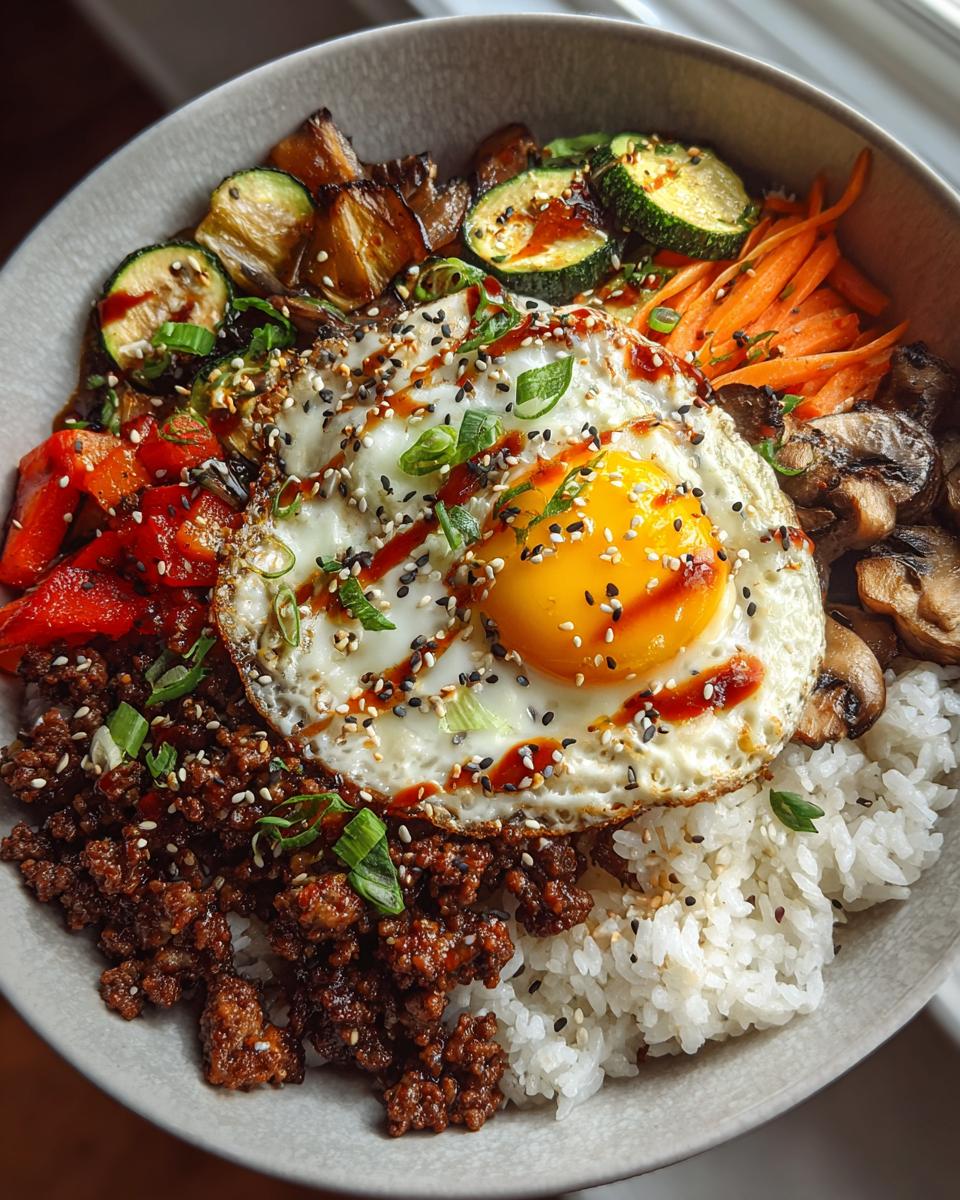
While your Sheet Pan Bibimbap is baking, it’s the perfect time to whip up that incredible gochujang sauce. In a small bowl, whisk together the gochujang, sesame oil, soy sauce, rice vinegar, sugar, minced garlic, and toasted sesame seeds until smooth. Once the beef and vegetables are done, pull them from the oven. To serve, spoon hot cooked rice into bowls, then top generously with the flavorful beef and roasted vegetables. Drizzle liberally with your homemade gochujang sauce. For an extra special touch, add optional toppings like a perfectly fried egg, a spoonful of tangy kimchi, a sprinkle of sesame seeds, or some fresh chopped green onions. Enjoy your beautifully presented and delicious meal!
Tips for Perfect Sheet Pan Bibimbap
Achieving the best results with your Sheet Pan Bibimbap is all about a few key details. First, ensure your vegetables are cut into roughly similar sizes. This promotes even cooking, so everything gets tender-crisp at the same time. For the meat, avoid overcrowding the pan; giving it space helps it brown nicely instead of steaming. Don’t be afraid to stir it halfway through to break up any clumps. Finally, taste your gochujang sauce and adjust. A perfect sauce balances sweet, savory, and spicy to complement the roasted ingredients.
Customizing Your Sheet Pan Bibimbap
One of the joys of Sheet Pan Bibimbap is its adaptability! Feel free to swap out the vegetables for whatever you have on hand – broccoli florets, asparagus, or even sweet potato cubes (cut them smaller for faster cooking). For a vegetarian option, seasoned firm tofu or tempeh crumbles work wonderfully in place of the beef. And remember, you can always dial up or down the gochujang for your preferred spice level!
Sheet Pan Bibimbap: Frequently Asked Questions
I get a lot of questions about how to best enjoy and adapt this Sheet Pan Bibimbap recipe, so I’ve gathered some of the most common ones here. These tips will help you make this dish a regular in your rotation, whether you’re planning ahead or looking for creative twists. It’s all about making this flavorful meal work for your life!
Can I Prepare Sheet Pan Bibimbap Ahead of Time?
Absolutely! For meal prep, you can chop all your vegetables and whisk together the gochujang sauce up to 2 days in advance, storing them separately in airtight containers in the fridge. You can also season your ground meat the day before. Assemble and bake the Sheet Pan Bibimbap just before serving for the freshest taste and best texture.
What Are the Best Substitutions for Sheet Pan Bibimbap Vegetables?
This Sheet Pan Bibimbap is wonderfully flexible! Feel free to swap out the vegetables based on what you have or what’s in season. Great alternatives include broccoli florets, asparagus spears, green beans, thinly sliced cabbage, or even small cubes of sweet potato (just ensure they’re cut small enough to cook in the same time frame). The key is to keep pieces roughly the same size for even roasting.
Estimated Nutritional Information for Sheet Pan Bibimbap
Here’s an estimated nutritional breakdown for one serving of this Sheet Pan Bibimbap (without rice or optional toppings). Please remember these are approximate values and can vary significantly based on the specific brands of ingredients you use, portion sizes, and any substitutions. This is meant to give you a general idea for planning your meals.
Rate This Sheet Pan Bibimbap
I absolutely love hearing from you! If you’ve tried this Sheet Pan Bibimbap recipe, please take a moment to leave a comment below and give it a star rating. Your feedback helps me and other home cooks. Don’t forget to share your delicious creations on social media too – tag me so I can see your amazing results!
Print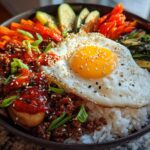
Sheet Pan Bibimbap
- Total Time: 35 minutes
- Yield: 4 servings 1x
- Diet: None
Description
Sheet Pan Bibimbap is a convenient and flavorful meal, perfect for a quick dinner. It features seasoned vegetables and beef cooked on a single sheet pan, then served over rice with a spicy gochujang sauce.
Ingredients
- 1 pound ground beef or ground turkey
- 1 tablespoon sesame oil
- 1 tablespoon soy sauce
- 1 teaspoon minced garlic
- 1/2 teaspoon grated fresh ginger
- 1/4 teaspoon black pepper
- 1 cup sliced carrots (about 2 medium carrots)
- 1 cup sliced zucchini (about 1 medium zucchini)
- 1 cup sliced bell peppers (any color)
- 1 cup sliced mushrooms
- 1/2 cup chopped onion
- 1 tablespoon olive oil
- Cooked rice, for serving
- Optional toppings: fried eggs, kimchi, sesame seeds, chopped green onions
- For the sauce:
- 2 tablespoons gochujang (Korean chili paste)
- 1 tablespoon sesame oil
- 1 tablespoon soy sauce
- 1 tablespoon rice vinegar
- 1 teaspoon sugar
- 1 teaspoon minced garlic
- 1 teaspoon toasted sesame seeds
Instructions
- Preheat oven to 400°F (200°C). Line a large sheet pan with parchment paper.
- In a medium bowl, combine ground beef, 1 tablespoon sesame oil, 1 tablespoon soy sauce, 1 teaspoon minced garlic, ginger, and black pepper. Mix well.
- In another large bowl, combine carrots, zucchini, bell peppers, mushrooms, and onion. Drizzle with 1 tablespoon olive oil and toss to coat.
- Spread the seasoned vegetables on one half of the prepared sheet pan.
- Crumble the seasoned ground beef over the other half of the sheet pan.
- Bake for 15-20 minutes, or until the beef is cooked through and the vegetables are tender-crisp. Stir beef halfway through cooking to break it up.
- While the bibimbap is baking, prepare the sauce: In a small bowl, whisk together gochujang, 1 tablespoon sesame oil, 1 tablespoon soy sauce, rice vinegar, sugar, 1 teaspoon minced garlic, and toasted sesame seeds.
- Serve the cooked beef and vegetables over hot cooked rice. Drizzle with the gochujang sauce and add optional toppings like fried eggs, kimchi, sesame seeds, or green onions.
Notes
- Adjust the amount of gochujang in the sauce to your preferred spice level.
- Feel free to customize the vegetables based on what you have on hand.
- For a vegetarian version, substitute beef with firm tofu or tempeh.
- Leftovers can be stored in an airtight container in the refrigerator for up to 3 days.
- Prep Time: 15 minutes
- Cook Time: 20 minutes
- Category: Main Dish
- Method: Baking
- Cuisine: Korean
Nutrition
- Serving Size: 1 serving (without rice or optional toppings)
- Calories: 450
- Sugar: 8g
- Sodium: 850mg
- Fat: 28g
- Saturated Fat: 10g
- Unsaturated Fat: 15g
- Trans Fat: 0.5g
- Carbohydrates: 25g
- Fiber: 5g
- Protein: 30g
- Cholesterol: 90mg